Showing posts with label Operating. Show all posts

Saturday, January 9, 2021

FTDX10

 So, I did a thing...


First, keep in mind my K3 is #216, it hasn’t had any of the hardware revisions done to the original model, much less the K3S synth upgrade. But it’s still the best receiver I’ve ever used under tough conditions, so much so that I’ve spent most of the last 13 years completely free of rig envy. I did not and still do not need a better radio and am not looking for one; I just wanted a new second 100w rig, and I bought it fully aware of all the important (to me) K3 features the 10 is missing. 


I knew it would be a solid performer from reading some of Rob Sherwood’s comments, but I am stunned. I’ve been playing with this thing in the NAQP CW contest, purposely looking for weak signals next to strong ones to test against the K3, and I cannot find any case in which the K3 could hear better than the FTDX10. Mostly the same, but occasionally a few where the 10 really outdid the 3. 


North American QSO Party in full swing.

Best example: Both radios set as close to identical as possible: bandwidth 300 Hz, APF on, 6dB ATT, preamps off. Weak signal on frequency x, strong signal on x+100Hz. The strong signal was still clearly audible inside the passband of the K3, while there was barely a trace of it on the 10–maybe some light key clicks on signal peaks, but no cw at all, Even when using the 500Hz roofing filter instead of the 300Hz.. No matter what amount of tweaking I did to the K3, I could not remove it from the passband (short of using a notch filter). I think the difference can be attributed to its APF—the 10’s APF is adjustable with three settings (NARR, MED, WIDE; mine is set to NARR), while the K3’s APF only has one which appears to be not quite as sharp as the 10’s. The K3 did not, however, exhibit any noticeable AGC pumping or other degradation to signal quality. This was an extreme case that I deliberately went looking for. Most of the time I couldn’t tell much difference between the two receivers. Bear in mind that I’m just using an end-fed wire, my “real” antenna has been down since my last move in 2016. So there’s not a lot of microvolts present at the antenna connector.


On transmit, T/R relays clickety-clicking isn’t too bad. If I were to use it in a contest, though, I’d probably turn off the full break-in and go semi-. The fan comes on during RX and isn’t exactly whisper quiet. I’m pretty tolerant, I’ve got all sorts of ambient noise in my shack that’s worse, so it’s just another hum.


Noise reduction works nicely on CW. On phone, I typically run the DNR lightly on the K3; on the FTDX10 it introduces a reverb to the signal that I don’t like, but that is pretty much default settings. I haven’t tweaked any of the settings yet. And there are a LOT of settings to set! ðŸ˜³ I’ve only got a few hours seat time with this thing and have barely cracked the manual. 


The panadapter works. First thing I did was turn off the 3D waterfall. I’ll let the fanboys argue about whether the 7300 or 10 has the better fishfinder; to me it’s like Ford and Chevy guys arguing about who has the better radiator. It works as well as or better than my Flex 1500, and that works well enough for me. All but three analog controls are crammed to the right of the screen. There are a lot of them (24) and some of the buttons are in a tight place between protruding knobs. Familiarity will come over time—I spend a lot of time with my finger ready to press or turn something, but not sure where to poke it. Lol! I’m happy to say that they’ve at least got the right analog controls. Nothing that important hidden deep in menus, I don’t think. And the menus are a whole lot easier to navigate through than the K3 by a long shot. 


I posted a video of my first 5 or so minutes using the FTDX10 for the first time fresh out of the box...before I even read The Book of Words!: 


More to come as I dig into this rig.

Sunday, December 9, 2018

#shackcleaningsunday


Against all expectations, I actually did find a floor beneath all the wires and dust bunnies.

Friday, November 30, 2018

DX - November 2018


DX I worked in November (all CW).

QRP DXCC total (worked) is now at 64 entities, up from 58 when I left off in August 2017 - six new ones out of 24 contacts. I can live with a 25% ATNO rate. Lol!

Tuesday, November 20, 2018

Mail Call!

Received from buro 20-Nov-2018

Monday, November 19, 2018

Early operations from NA-076


At the moment I'm working on a makeover for the Cedar Key Historical Society's web site, and as I was flipping through old photos I came across this healthy dose of Hallicrafters goodness! Click the photo to enlarge it.

Sunday, November 18, 2018

Back again.

I've been tuning around since Wednesday with the little rig (at 5 watts) and a short wire (poorly matched) at the ass end of the sunspot cycle. Could it get any worse? 🤔

Making a few contacts, added a couple of new ones for the QRP DXCC chase (8P9 and VP2V) bringing me up to 60 worked. But damn, it's hard to make Qs! So much easier with the KPA500...

The KX2 is an amazing radio. I'm making this my main rig until I accomplish two goals: get the Tarheel and ground radials installed, and work QRP DXCC. I don't think I'm going to get 40 new ones by the end of the year, but maybe by February and the Orlando fest. The Tarheel screwdriver, though... that would definitely help with the DXCC goal.

I've been working in WordPress for a couple of clients and loving it, so this blog may be undergoing a major redesign soon.

The Jackonaut has called dibs on my office/shack, so he's the Second Op now, relieving the Tiny Brown Kitten of those duties.


Saturday, April 8, 2017

New QRP Personal Best: E51DWC (South Cook Islands)

I have been working E51DWC (op Milan, OK1DWC) on several bands (10/15/17 CW, and 15 Phone) at 100 watts. I finally heard him calling CQ on 12m phone just past midnight UTC with few takers. Could I have been at the right place at the right time for a change?

Since South Cook Islands is one that I need on 12m, and since everyone knows QRP phone doesn't work when the DX is buried in the noise, I bumped the K3 output power to 100 watts and called about a dozen times. But no love, he was weak and the QSB was pretty bad, so I decided that this wasn't going to happen.

I reset the K3 to 5 watts... and just as I took my fingers off the Power control and was about to switch bands his signal peaked at around S5. I grabbed my Mike, dropped my call after his CQ, and he came back right away with a "Whiskey Whiskey Two, Whisky Whisky Two?" I repeated my call, he returned with a 59 (yeah, sure...), we exchanged signal reports, and in the log he went! At 5 watts. On a "dead" band.

As with all our prior QSOs, Milan uploaded to ClubLog very quickly so I have proof I wasn't imagining it all.

According to Google maps, Rarotonga is a bit over 6,175 miles from Cedar Key, or 1,235 miles per watt. This crushes my previous personal best QRP DX record, TX6G Austral Is. from West, TX (5,093 miles, 1,018 miles per watt) by about 25%.


I'm starting to wonder whether I really need that KPA500 after all.

VOACAP shows that I was indeed at the right place at the right time -- 12m is strong to E51 in our (local) late afternoons and early evenings; my 10m contact with E51DWC was at around 2100 UTC, which fits this model as well. Good to know.

Tuesday, April 4, 2017

March 2017 and into April... plus some thoughts on QSLing.

So March was pretty good to me. Getting the antenna outside was a big help, naturally. Working 47 countries with an indoor wire was something of a miracle, but they were easy countries - lots of Caribbean and Euro DX, mostly in the CW contest, but nothing I would consider exotic, much less new. Moving the wire out of doors and just outside my window I only added another 35 countries, but that included four ATNOs: VP6EU on Pitcairn, J5UAP in Guinea-Bissau, 5U5R in Niger, and TU7C in Cote d'Ivoire (that's "Ivory Coast" in 'Murican). I was still getting a lot of noise, possibly because of the short (approx. 10 ft.) coax run and close proximity to power lines in the front of the house, so this past Sunday I relocated the antenna to the back of the house, noticeably improving the noise situation.


So we'll see how this works. Bands took a dive for a few days but are coming back following a major solar event on 01/02-April. As of today (04-April), my DXCC count is 226 worked, with 210 confirmed (more on this later), and the DXCC Challenge total on LOTW is 774. My 80m DXCC count took a big jump from single digits to 29 confirmed, and I'm within spitting distance of 100 on 30, 17, 12 and 10.

And while I'm on the subject of confirmations... I've had a bit of a shift in my opinion on the whole concept of "countries confirmed." For the couple of decades as a radio amateur I held the belief that a QSO only "counts" when you have a card in your hand. This made sense at the time because that was the only way of knowing whether the DX didn't blow your call (or vice versa). Then along came Logbook of the World; now we had a second "official" metric for determining whether you had a DXCC entity confirmed. All well and good. At this time these are the only two methods acceptable to the ARRL to qualify for their awards, and since it is their award they get to make the rules. But while you can have a card in hand or an LOTW confirmation in your account, even then it doesn't officially "count" until you pay the ARRL a fee. This is where I call BS.


The fact is, I know that I worked a station if, 1.) The contact is in my log; and 2.) I have a card or an LOTW confirmation. If I decide not to pay the ARRL to get the credit applied to my DXCC account, does that mean I don't have a confirmed contact? Of course not. It only means that I can't use that contact for an award that, for the most part, is meaningless to me. I reject the notion that I need to pay the League (or anyone else) in order to have my achievement validated.


Then comes the matter of other, alternate methods of confirmation. We have several online resources -- eQSL.cc, ClubLog, HRDLog.net, QRZ, and all the online logs of individual stations and DXpeditions -- that can be used to match one's log entries with those of a DX station. These don't count for the ARRL's DXCC award, of course, but if ClubLog, for example, shows a QSO match between my log and the DX station's log, that's all the confirmation I need to know that the QSO was good. Whether or not the ARRL accepts it as a "real" confirmation is irrelevant unless I want their fancy piece of paper to hang on the wall.


At this moment in time, I actually have that fancy piece of paper hanging on my wall. It's there only because I long dreamed of earning DXCC since I was a kid. It took me many years of intermittent operation to achieve it, but sometime in 2013 I finally got 100 entities confirmed on LOTW, I entered my credit card info on the ARRL web site to pay for the 100 credits needed to get the DXCC Mixed award. A few weeks later I received my cardboard tube in the mail, dutifully put the certificate in a nice big frame and hung it on the wall of my shack where it remains to impress all who enter. Meaning, of course, only myself.


Since getting my DXCC Mixed award I have received more LOTW confirmations (a lot more, in fact) and many more paper cards, but I have never paid to apply these credits to my account. I currently have 210 countries "confirmed" to my satisfaction through one or more of the methods listed above. However, even though I can easily qualify for several additional DXCC awards and endorsements for individual modes and bands, according to the ARRL I only have 100 countries confirmed because that's all I paid them for. So who do I believe, the ARRL or my own very meticulous records? Thanks, but my own word is good enough for me. I'll keep the $125 or so bucks and pass on the wallpaper for now.


So while I used to believe "it only counts if you have the card," technology today allows me to revise that opinion to mean "it only counts if you can prove you're in the other station's log." Because, when you boil it all down, that's really all the card did in the first place. Thankfully, we can do that now through several different online systems with far less expense and delay. If someone thinks a QSL doesn't count because I didn't pay the League, tough cookies. I just don't care.


Does this mean I'll never apply for additional DXCC credits again? No... I really want a 5-Band DXCC plaque (also a childhood dream), and the DXCC Challenge appeals to me as well, so when either or both of those requirements are met I'll most likely pony up the dough for those awards, and also catch up with all the other awards and endorsements I qualify for at the same time while I'm at it. But for now if someone asks me how many countries I have confirmed, my answer will be "210," regardless of what anyone else thinks. Because it's true.

Saturday, March 18, 2017

The road to DXCC on 80m is long and slow...

...but I'm trying. Ten new ones confirmed since last month, all from the two ARRL contests.


That makes it a total of 26 now confirmed on 80. Since 1988. Sigh. Maybe I need an antenna longer than 24'.

Wednesday, March 15, 2017

DXCC #226: TU7C Cote d'Ivoire (and a new band slot: 9G5X Ghana on 17m)


Two more from Africa on 17m...

TU7C Cote d'Ivoire finally came back to me with the correct call after several exchanges of "WA2PT 5NN." Good signal around 1530. ClubLog upload followed after about an hour. Great operation! DXCC #226 in the log!

Update 16-Mar-2017: Second Band (15m)!

Later, the British crew at 9G5X Ghana was pounding in and gave me a new band slot (I'd already worked and confirmed 9G5ZZ on 20m back in Texas, May 2014). Woke up Wednesday morning to find a match on ClubLog.

Update 18-Mar-2017: Second Band (15m)!

Bands have been quiet (possibly too quiet...) the past few days, with SFI around 70 and SN at 0. My 24' end-fed and 100W is not giving me much love on any of the lower bands, at least not in the general direction of Africa. Even on 20m it is difficult to copy 5U5R, 9G5X, and TU7C; it seems like 17m is this antenna's sweet spot. That's cool, I need to concentrate on filling in some band slots on 17 anyway, though I sure miss busting pileups on 40m with the KPA500.

Update 16-Mar: LOTW from 9G5X is in!


Friday, March 10, 2017

DXCC #225: 5U5R Niger

Second ATNO of the day -- 5U5R in Niger! Another case of 17m QSB and the EU wall made this a tough one. I knew from the cluster that it was spread out as far as +5 from the DX frequency, but I couldn't hear any of the EU stations and very, very few stateside callers. The DX, however, was pretty strong, his signal picking up as the afternoon went on. I couldn't figure out where to place my call, though, so I parked my ass on one frequency and waited for him to come to me. This took hours, on and off, until I finally got him at 1947 UTC. The expedition's online log updated soon thereafter, and a smiley face under 17m CW relieved me of the anxiety of wondering whether my call was blown.


DXCC #224: J5UAP Guinea-Bissau

I've been chasing J5UAP Guinea-Bissau for a couple of days (along with 5U5R and 9G5X), pulling what's left of my hair out. Then today happened... got after just a couple of calls on 17m at 1514 UTC. No upload to ClubLog, wasn't sure if the Q was good... then I found his own online log (www.cqafrica.net) which was updated after a few hours. Boom!


Sunday, March 5, 2017

2017 ARRL International DX Contest (SSB)


Total DXCC: 28
New DXCC: 0
New Band Slots: 11 (?)
Category: SOAB-L Unlimited


No surprises or big moments, and frankly I wasn't really feeling like working a phone contest, so I didn't spend but a few hours total time at the radio this weekend. Band conditions seemed weak Friday night (local), only one QSO on 40m. 

Played a little on 20m for an hour Saturday afternoon (local), then that evening (UTC Sunday morning) I decided to cherry-pick some needed band slots on 80m. I went to bed Saturday night with 7 new ones on 80m, plus four more that I worked in the past but still need QSL'd. Not sure if I picked up any new ones on other bands, wasn't really paying attention except on 80. 

Had a good hour between 1900 and 2000 on Sunday afternoon (local) working 15m. Nothing at all heard on 10m whenever I checked. Noise levels are still higher than I'd like but I'm definitely hearing better with the antenna outside hanging off the Jackite pole.

In the end, I added 6 countries to my YTD DXCC total (now at 59 since going QRV on 24-Jan). Now waiting for some LOTW magic -- my 80m confirmed count was at 17 before this contest.

I did get to use the Yamaha CM500 headset for the first time. It worked well except for RF getting into the audio on 15m. That's when I switched over to the MH2 hand mic which worked fine. Might be time to get the Heil boom mic out of storage. If nothing else it will give me a place to hang the headphones...

Thursday, March 2, 2017

DXCC #223: VP6EU Pitcairn Island

I've been watching the VP6EU DXpedition since it began operations a couple of weeks ago, but I could barely hear them with the indoor wire so I had pretty much lost hope. Then yesterday happened. I decided to put my ass in gear and at least get the window feedthrough panel in place so I could throw the Ultimax end-fed up as a temporary solution. I took some doing finding someone was a saw to cut the panel to the proper length; I had to put a PL-259 on a short coax run using some angel-hair thin solder; and finally I needed to move my desk (with everything on it) away from the window. All done without too much trouble.

With the 31' Jackite pole I bought last year zip-tied to the front deck, the antenna zip-tied to that, and coax attached, I was in business. I'm still getting a lot more noise than I did at the last QTH, but the signals are noticeably stronger when they don't have to pass through a steel roof. It seems like the K3's ATU is getting a better match, too. Still can't run the amp, so 100 watts is what I have to work with for now.


Right off the bat I easily worked VE3VSM/HR9 Honduras (Roatan Is.) on 20m, PJ7AA  Sint Maarten on 17m, and ON4UN Belgium on 40m. Okay, all working. The hunt for VP6EU was on.

I kept my eye on the cluster until I saw VP6EU spotted on 17m just after local noon. He wasn't terribly strong but above the noise level by an S-unit or so. Dropped my call once and got him. No. 223 in the log!


Among the other current DXpeditions that I've been able to check off the list today is TX5T Austral Island on 15m. I had Austral on all bands 80-10 from the TX6G operation a few years back while I was in TX, but this is another new one for my Cedar Key QTH. Also worked 5K0N on San Andres Island on 17m this morning.


Monday, February 20, 2017

2017 ARRL International DX Contest (CW)

Total DXCC: 44
New DXCC: 0
New Band Slots: 3
Category: SOAB-L Unlimited

No outdoor antenna at the Paroda Ave. QTH, but I had the UltiMax end-fed strung around the shack for a few weeks. Prior to the contest I had limited results -- the occasional Caribbean  and Central American station here and there. So when the contest weekend rolled around I had pretty low expectations. Due to RF issues when running 500W (mouse moving around the screen on transmit, all sorts of beeping and menu openings, etc.) I kept it at 100W and had no problems, as long as I kept my hand off the mouse when transmitting; otherwise I'd get macro repeats and other weird happenings.

Wkg condx...

I started out on 40m around 0230 Saturday, immediately started working into Europe, as well as Madiera Is. and the usual Caribbean big guns (and a few little guns) Eventually got KH6LC in Hawaii, the only Pacific station worked during the test. Only put in four hours, picking through the cluster. Since I wasn't after a big score I chose not to work any country twice per band. Went to bed with 19 countries in the log.

Saturday afternoon I spent an hour and change making 5 QSOs on 15m and one on 20m before running around town. Back in the shack that evening (UTC Sunday morning) and got TA3D Turkey right off the bat, then a bunch more Europeans. Later on I tried 80m and managed to work some more Caribbeans (US V.I., Aruba, Bonaire, Turks & Caicos, and Curacao) and France.

Sunday afternoon and evening (local) between 1945 and the end of the contest was mostly spent in and out of the shack, bouncing between 10m, 15m, and 20m before ending on 40m. At this point I was pretty surprised to have made more than a handful of contacts, so I set myself a goal of working 30 countries. Then 40 countries. Then 60 QSOs. Then 10,0000 points. Then 12,000 points.

Ended the weekend with 65 QSOs for 44 Countries, 65 mults, and 12,675 points. Not bad for 100w into a 24' piece of wire inside a house with a metal roof. 😎


Monday, February 13, 2017

No. 200!


...and that, my friends, is #200 confirmed! 

Friday, April 10, 2015

March 2015

DX - I was not quite as active in March as I'd been in Jan/Feb, but I ended the month with three all-time new countries and a YTD DXCC total of 164, up 13 from the end of February. Had a fine run of African DX, some easier than others. Here's the highlight reel:
  • E51UFF North Cook Islands: ATNO #216. Worked op LA5UF on four bands (40/20/12/10), always weak but always in the log on first or second call. No ClubLog or LOTW. 
  • E30FB Eritrea: ATNO #217 - This was tough, took a week before finally get in the log on two bands (12/20) in one day (15-Mar). Matched on ClubLog.
  • A71EM Qatar: ATNO #218. Fairly easy, LOTW confirmation in three days. Tnx Juma!
  • 9Q0HQ Dem. Republic of Congo: Worked on five bands (40/30/20/17/12) but the 17m QSO is missing from their online log. I'll take four. 
  • 7QAA Malawi: Five bands (20/17/15/12/10), all ClubLog matched.
  • 5Z4/DF5ZP Kenya: Second band (15) for the DF3FS/DF5ZP operation. No LOTW, apparently...
  • 5Z4LS Kenya: ...but Nick G3RWF thankfully does use LOTW! Worked him on 12m and got LOTW the same day for DXCC Mixed #178.
  • FR5DX Reunion Island: This was a nice catch! I was just tuning around the 20m phone portion and stumbled upon Erick in QSO with another op. Dropped my call after they were finished and got a 58 report back. No ClubLog/LOTW.
  • V5/G3TXF: Only heard Nigel on one band (12) and got him in the log. ClubLog matched, LOTW confirmed a few days later.
  • KG4HF Guantanamo Bay: Added two more bands (30/15) to the three QSOs in February (20/17/12), although the 12m QSO was busted. So this operation ended with four bands matched on ClubLog and confirmed via LOTW.
  • 4Z5ML Israel: Finally found a 4X who uploads to LOTW! Thanks for DXCC Mixed #179, Alex!
Last 10 New DXCC Worked
218QATARA71EM3/27/2015
217ERITREAE30FB3/15/2015
216N. COOK ISLANDSE51UFF3/4/2015
215LORD HOWE ISLANDVK9LC2/25/2015
214REPUBLIC OF SOUTH SUDANZ81X2/22/2015
213KALININGRADUA2F2/22/2015
212COCOS IS.TI9/3Z9DX2/19/2015
211KENYA5Z4/DF3FS2/19/2015
210MAURITANIA5T0JL2/13/2015
209CAMEROONTK3SN2/11/2015

Wednesday, March 18, 2015

Sun Fart

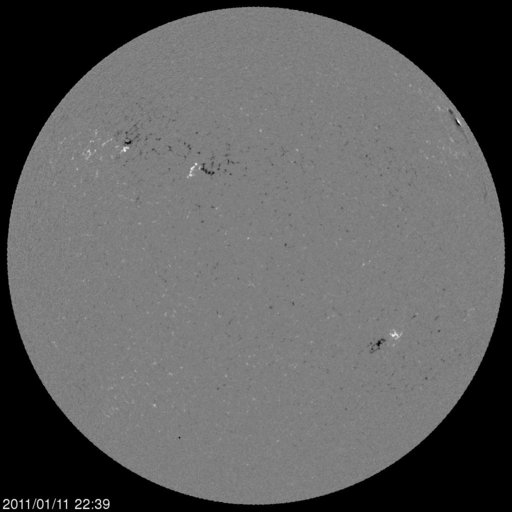
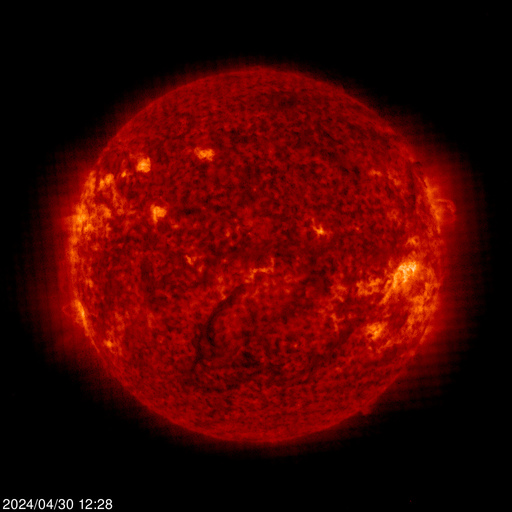
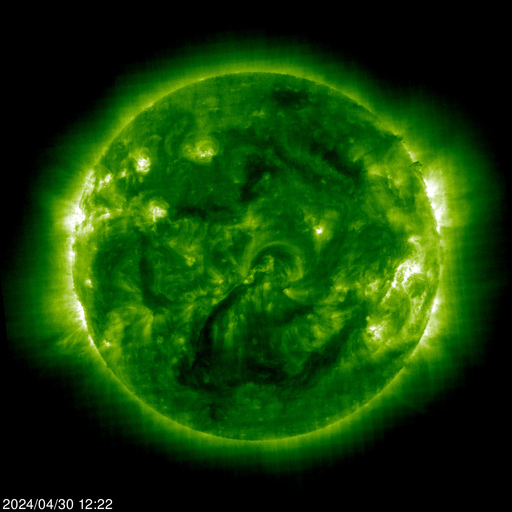
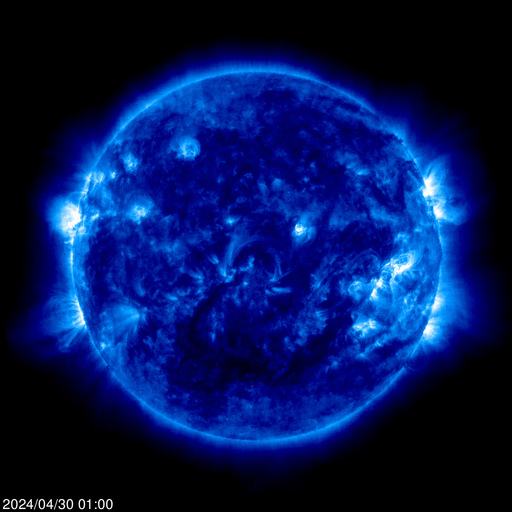
Our geomagnetic field is currently doing a song and dance with old Sol.


Via The Watchers:
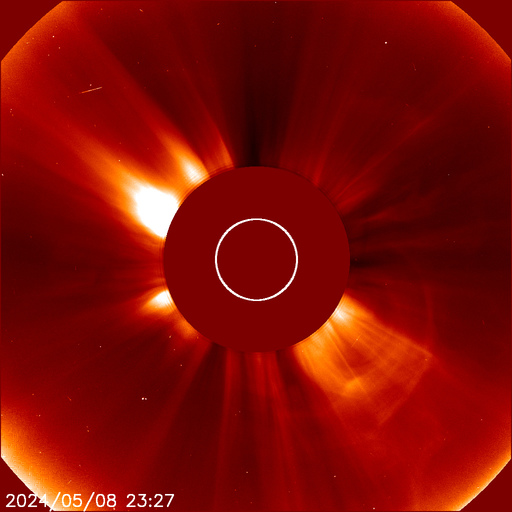
A sequence of events led to an Earth-directed asymmetric halo CME on March 15, 2015. The events began with a 14 degree long filament eruption, centered near S24W38, lifting off between 00:45 to 02:00 UTC. This was followed by C2.4 flare at 00:41 UTC and a long duration C9.1 at 02:13 UTC, both from Region 2297. 
Associated with the C9.1 flare were low-frequency radio emissions including Type II (estimated velocity 745 km/s) and Type IV radio sweeps. WSA/ENLIL modelling showed an approximate arrival time around 20:00 on March 17. However, it appears this CME arrived some 16 hours earlier (see update #2).
An interplanetary shock wave arrived at the ACE spacecraft around 04:15 UTC and at Earth a half hour later.Geomagnetic K-index of 5 (G1 - Minor) threshold was reached at 05:59 UTC. Potential impacts: Area of impact primarily poleward of 60 degrees Geomagnetic Latitude. Weak power grid fluctuations can occur. Minor impact on satellite operations are possible. Aurora may be visible at high latitudes, i.e., northern tier of the U.S. such as northern Michigan and Maine.
A G2 - Moderate geomagnetic storm warning has been issued based on solar wind signatures at the ACE spacecraft. Under G2 conditions, area of impact is primarily poleward of 55 degrees Geomagnetic Latitude. Power grid fluctuations can occur. High-latitude power systems may experience voltage alarms. Satellite orientation irregularities may occur; increased drag on low Earth-orbit satellites is possible. HF (high frequency) radio propagation can fade at higher latitudes. Aurora may be seen as low as New York to Wisconsin to Washington state.
Update #1: 
Geomagnetic K-index of 6 (G2 Moderate geomagnetic storm) threshold was reached at 08:46 UTC.
Update #2:
Initial SWPC's diagnosis suggested the arrival of the anticipated CME from March 15, however, the subsequent temperature and density measurements pointed towards a recurrent negative polarity coronal hole high speed solar wind stream (CH HSS). 
The disturbed conditions may be the combined effects of the high speed stream and CME.
Geomagnetic K-index of 7 or greater (G3 or greater - Strong to Extreme) is expected as the impacts from today's shock continue. 
Update #3:
Geomagnetic K-index of 8 (G4 Severe) threshold was reached at 13:58 UTC. 
I wasn't on the radio at all this afternoon (17-Mar) so I can't say how the conditions on the higher bands were. Tonight (18-Mar @ 0300 UTC) 40m has a noise level at S3, with occasional crashes as high as S5. The A index was 100 earlier, currently 117 with a K of 6.

9Q0HQ (Dem. Rep. of Congo) is about S4 on 40m, maybe a little weaker than they've been this past week but still readable; 7QAA (Malawi) is a bit stronger at S5 on 40m and about S4 on 30m. Oddly, hardly any other stations heard on 30m at this time other than a few stateside ops, but there are a few EU signals on 40m.


Sunday, March 1, 2015

February 2015

DX - Some great operations graced the bands in February and I had a fair amount of luck working most of them, including nine all-time new ones.

  • K1N Navassa Island: ATNO #207. Possibly the biggest operation that we'll see in 2015. Worked on 80/40/30/20/17/15m CW and 20/15m SSB. My Navassa exploits are documented here. The K1N guys made 140,000 Qs with 30,000+ unique stations. All QSOs matched on ClubLog. More on K1N: NavassaDX.com and DX-World.
  • S79AC and S79CO Seychelles Is.: ATNO #208 - First S79AC on 30m CW, then S79CO on 15m 10 days later. The 30m QSO has been matched on ClubLog.
  • TJ3SN Cameroon: ATNO #209. Worked on 10m only, ClubLog match and LOTW QSL the next day! Good sigs with some QSB.
  • 5T0JL Mauritania: ATNO #210. Worked on 12m CW, no ClubLog or LOTW. An email exchange with op Jean confirms the contact for me, so I will send a QSL when I get mine printed. Great CW op! More on 5T0JL here.
  • 5Z4/DF3FS Kenya: ATNO #211. Worked 12m CW, no ClubLog or LOTW, but I am confident this was not a blown Q. Ops Bertrand DF3FS and Oli DL9OLI are scheduled to be QRV until March 8.
  • TI9/3Z9DX Cocos Island: ATNO #212. Worked 17, CW, matched on ClubLog. This was a difficult one to work because of pileup bedlam and a general lidfest on the DX frequency throughout the operation. I was originally critical of the way 3Z9DX handled things at his end but I've become more understanding and sympathetic since learning of the difficulties he and his team endured. More on DX-World and AmateurRadioDX.com.
  • UA2F Kaliningrad: ATNO #213. Worked 15/10m CW during the ARRL International DX Contest. Matched on ClubLog.
  • Z81X Southern Sudan: ATNO#214. Caught this one by surprise during the ARRL contest on 20m CW. ClubLog not updated since 2013, hoping they upload soon. LOTW shows an upload on 3/1 but so far no QSL. Hoping this one wasn't blown; it seemed like a clean contact at the time.
  • VK9LC Lord Howe Island: ATNO#215. Worked on 12/10m CW. No ClubLog or LOTW log data at this time. More: DX-World.
  • KG4HI and KG4HF Guantanamo Bay: Two different operations, with KG4HI worked on 30m CW and KG4HF on 20/17/12m CW. Only the 30m, 20m and 17m contacts have been matched in ClubLog and confirmed on LOTW so I assume the 12m contact was busted.
  • C5DX The Gambia: Another C5 expedition following C5X. Worked 40m CW only, matched on ClubLog. Good sigs into FL but I didn't chase them since I have C5X verified on 40/30/20/15/12/10m. Didn't hear them on 80/17m anyway. 
  • 3G0ZC Juan Fernandez Islands: Worked 30/20/15/12/10m. Already have Juan Fernandez verified on 40m CW (the XR0ZR operation in 2013) so I'm just filling in missing bands. QRV until 3/4 so maybe there's still time for 80/17m. No ClubLog or LOTW yet. More on 3G0ZC: JuanFernandez2015.com  & AmateurRadioDX.com.
  • 7Q7GIA Malawi: Worked 12m CW, matched on ClubLog and verified on LOTW (DXCC Mixed #175 and CW #160). Already have a 30m CW QSO with 7QNL from June 2014 matched on ClubLog. More on 7Q7GIA: DX-World.

That's 13 out of 131 DXCC worked in February, a good number of those worked during the ARRL Int. DX CW test. Funny how I was trying for 100 countries in January and fell short, then the following month worked well over 100 without noticing until the month was over. One good contest makes all the difference.

A total of 403 QSOs added 53 YTD new DXCC and bringing the YTD total countries worked to 151. Adding 31 zones worked YTD puts my 2015 CQ Marathon score at 182 through the end of February. I even made 9 phone QSOs! As I write this (3/1), 51 productive QSLs received last month (i.e., new country/mode/band slots verified) have my DXCC Challenge count sitting at 601.

More boring stats:

DXCC Totals
2/28/2015
CfdWkdCfdWkdCfdWkd
Mixed17521580m122917m67100
CW16020340m12214615m116160
SSB10513430m6410212m4393
Digital608220m13417510m6699

Last 10 New DXCC Worked
215LORD HOWE ISLANDVK9LC2/25/2015
214REPUBLIC OF SOUTH SUDANZ81X2/22/2015
213KALININGRADUA2F2/22/2015
212COCOS IS.TI9/3Z9DX2/19/2015
211KENYA5Z4/DF3FS2/19/2015
210MAURITANIA5T0JL2/13/2015
209CAMEROONTK3SN2/11/2015
208SEYCHELLESS79AC2/9/2015
207NAVASSA IS.K1N2/1/2015
206JORDANJY9FC1/31/2015

WPX (Confirmed LOTW)
AwardTotalAwardTotalAwardTotal
Mixed62780M2317M73
CW46740M27615M250
Phone21130M7512M43
Digital13620M33410M134

Thursday, February 26, 2015

K1N Interview for MDXC by W0GJ

The best comedy in ham radio can usually be found on the DX clusters during large (and small, for that matter) DXpeditions: the incessant whining and moaning from European ops who think they're being neglected. In an interview by the Mediterranean DX Club (h/t M0OXO) Glenn W0GJ was asked about this very thing, and he knocked it out of the ballpark:
Q: European stations complained a lot for the short time you applied during the best openings towards Europe. It has been your strategy or what?
A: QUITE THE CONTRARY!!!!!!
This is a MOST interesting point of discussion!
If you look at our logs, we spent MORE time working Europe than working North America. Our ClubLog statistics however show that North America had 58% of the contacts, Europe 32% and Asia 6%.
WHY, then, if MORE time was spent working EU, was EU about half the number of NA contacts???
Simple answer: RATE.   Period.
When you listened to us working NA, we could cruise right along at 300-350 Q’s/hour.   When working EU, we would be extremely lucky to see rates of 125 Q’s/hour. EU signals are as strong, if not stronger than NA signals, in the Caribbean. The west coast U.S. is much harder to work than EU.
Here is a quote I received after I returned home.   It is from a well-known DXer in Europe:
“I listened to XXX working US pile-up on 80m. Fantastic, at least 10 QSO’s minute and when he turned to listen for Europe, the rate was only 10 % of that.   Same on the other bands and modes.”
The problem is THROUGHPUT.   Rate. Efficiency. Cooperation. Whatever you want to call it.
For the time we spent working Europe, we should have MORE contacts than with North America, but that did not happen.   I COULD have happened!
No one more than me would like to have seen the EU Q’s outnumber NA Q’s.   For the “next one” I have some helpful suggestions to help those in EU to be more successful.
Here is what I see are the issues: 
  1. Not listening to the DX operator
  2. LISTEN to and LEARN the rate and rhythm of the operator
  3. LISTEN to WHERE the operator is listening and his PATTERN of moving his VFO, know where he will listen next!
  4. Learn to use your radio (split/simplex, etc)
  5. Do NOT jump to and call on the frequency of the last station worked. The DX station will NOT hear you because the din is total unintelligible chaos.   Move UP or DOWN from that frequency, as we on our end were continuously tuning up or down after each Q, so if one jumps onto the last-worked frequency, we will not hear you, even if you were the only one there, as we have tuned off.
  6. TURN OFF ALL SPEECH PROCESSORS AND COMPRESSION! Do NOT overdrive ALC.   There is a night and day difference in listening to NA/AS and EU pileups.   The horrible distortion makes it impossible to copy many, if not most EU callsigns.   There were MANY loud stations that we did not work, simply because we could NOT understand their terribly distorted callsign.   Have you ever listened to yourself in a pileup?   We gave many stations a “19” signal report.   Very loud, but extremely unintelligible!   You want to have INTELLIGABILITY, not distortion!
  7. Give your callsign ONCE and ONLY ONCE!   DO NOT KEEP CALLING! We would tune on by those who did not stop calling.   We are looking for RATE and getting stations into the log.   You should be, too!!!
  8. If the DX station comes back with your callsign, DO NOT REPEAT YOUR CALLSIGN, AS WE ALREADY KNOW IT or we would not have answered you.   Many stations (in all modes) would repeat their callsign two, three and even four times!   We only want to hear “5NN” or “59” from you.   Anything else is a total waste of time and CHEATS others out of a chance to get into the log.   Only repeat your callsign if it needs correction, and then let us know it is a correction.   Anything else is cheating others out of a contact, as our propagation windows and time on the island are limited and we need to maximize the opportunity for everyone.   SPEED.
  9. Take some time to listen to the next DXpedition working NA and listen to the rate and rhythm of the operator.   It is fast, quick and efficient, and more people get into the log! Then listen to him work EU.   The wise operator will catch on quickly to what it takes to get into the log!
  10. SPREAD OUT!   Our highest rates (for any continent) were working the edges of the pileup where there was less QRM and weak stations were much easier to work than loud stations in the middle of the pileup.   If we say, “Listening 200 – 210,” 70% of the pileup sits exactly on 200 in an unintelligible din, 25% of the pileup sits on 210 and is almost as bad.   5% of the pileup will be spread out somewhere between 201 and 209, making them very quickly put into the log.   S P R E A D   O U T ! ! ! !
  11. LOUD is NOT better!   MORE AUDIO/COMPRESSION is NOT better!   Finding the spot to be HEARD is the MOST important thing you can do to get into the log. My biggest thrill (and I’m sure on both ends) is finding the lone weak station and getting him into the log quickly.
  12. LISTEN to the DX operator INSTRUCTIONS!   As we would constantly tune our VFO, if we find a clear spot, we would often say, “33” (meaning for YOU to transmit on 14033, 28433, etc) and a few would listen and get into the log very quickly.   You cannot hear these hints if you keep calling calling calling calling………   Many times I would say, “listening 200-210” and after a while would say, “listening 240-250”.   Often 30-45 minutes, even and HOUR later, I would find MANY still calling on the original “200-210”…..of course, they would never show up in our log, as I was not listening there.   LISTEN LISTEN LISTEN and LISTEN SOME MORE.   The less you transmit, the better chance you have of getting into the log.
  13. LISTEN
  14. If you don’t want to get into the DX log, just ignore the above suggestions.
This advice should be taken by all, not just EU ops.